Experienced healthcare professionals who want to teach CPR and advanced life support need more than a current provider certification. Becoming an American Heart Association (AHA) instructor involves instructor preparation, discipline-specific training, practical teaching skills, and a monitoring process. In 2026, candidates should also be aware of the updated Instructor Essentials materials introduced following the 2025 AHA guidelines.
Understanding the pathway before enrolling can help prospective instructors prepare for each stage.
1. Start With a Current Provider Certification
The first step is to hold a current AHA provider course completion card in the discipline you want to teach. For example, candidates pursuing Basic Life Support (BLS), Advanced Cardiovascular Life Support (ACLS), or Pediatric Advanced Life Support (PALS) instructor status need the corresponding provider-level qualification.
Candidates should also demonstrate proficiency in the relevant clinical skills. For ACLS and PALS, professional licensure or certification in a healthcare occupation where the skills fall within the candidate’s scope of practice is required.
Before beginning, contact an AHA Training Center to confirm that it accepts new instructor candidates and is willing to align with you throughout the process.
2. Complete the Updated Instructor Essentials Course
Instructor Essentials prepares candidates to teach AHA courses and use the organization’s instructional materials correctly. The updated 2026 pathway uses a blended format that includes online learning and a hands-on session facilitated by Training Center Faculty.
The online portion includes a Core module covering instructor responsibilities, the AHA network, the Program Administration Manual, and the instruction cycle. Candidates also complete the discipline-specific module for the course they intend to teach.
This preparation covers more than clinical knowledge. It addresses how to guide learners, evaluate skills objectively, provide feedback, and follow AHA course policies.
3. Prepare for Hands-On Instructor Training
After completing the required online coursework, candidates attend the hands-on portion with Training Center Faculty. This stage helps them apply what they learned and practise delivering course content.
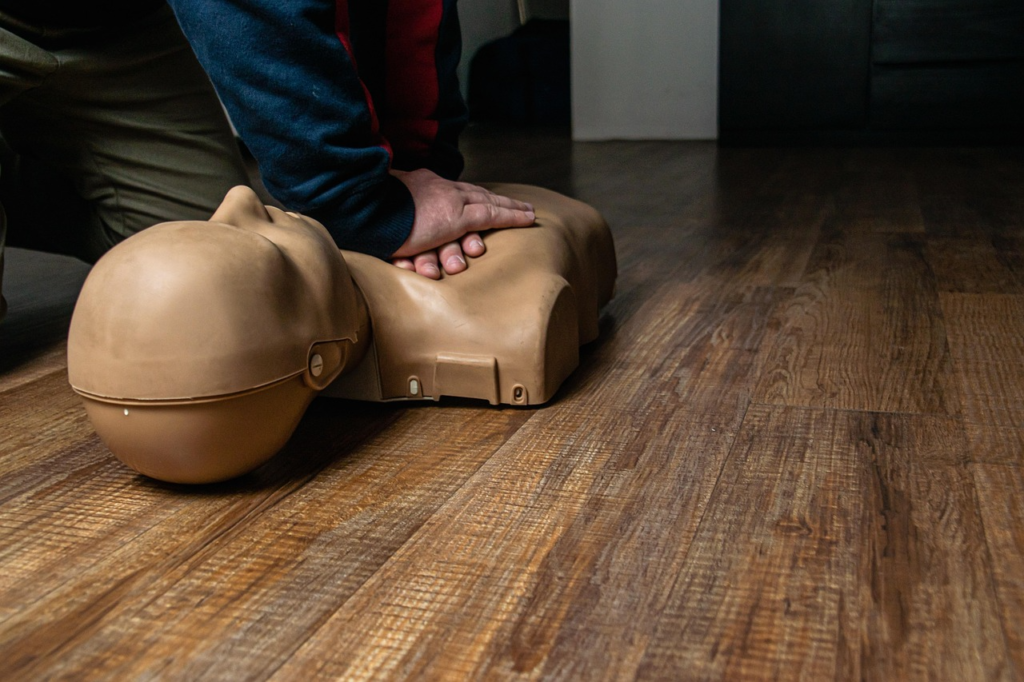
Depending on the discipline, preparation may involve facilitating learning stations, coaching students through resuscitation scenarios, conducting skills assessments, and providing structured feedback. ACLS and PALS candidates may also practise team-based scenarios and debriefing techniques.
The objective is to develop the teaching and assessment skills needed to help learners meet course requirements, rather than simply demonstrate personal proficiency.
4. Complete Monitoring and Instructor Alignment
Completing the online and hands-on portions does not finish the process. Candidates must also successfully complete monitoring, during which their teaching performance is evaluated according to AHA requirements.
Once the required stages are completed and the instructor eCard is issued, the new instructor must align with their Training Center or Training Site through AHA’s Atlas system.
Candidates should confirm the specific requirements and arrangements with their Training Center before starting, as it guides them through the process.
5. Understand the 2026 Materials Transition
The 2025 AHA guideline update introduced revised instructor training materials. Beginning March 1, 2026, instructors were required to use the updated course materials when teaching the affected courses. Existing instructors also needed to complete the applicable instructor updates for each discipline they teach. For new candidates, this makes it important to confirm that their preparation follows the current Instructor Essentials curriculum.
At CPR, ACLS & PALS Training Institute, we offer BLS, ACLS, and PALS instructor courses for eligible candidates. If you are searching for an AHA instructor course, we invite you to explore our training options serving Philadelphia, Bensalem, and surrounding areas, including Bucks and Montgomery Counties. We also provide other American Heart Association courses and CPR classes near you.
Contact us to learn more.