A simulated code reaches the point where a team should prepare for defibrillation. Instead, several seconds pass while responsibilities remain unclear. In a conventional exercise, the instructor might record the delay and discuss it after the scenario. Rapid-cycle deliberate practice, or RCDP, interrupts that sequence while the learning opportunity is still immediate.
Pause, Correct, Restart
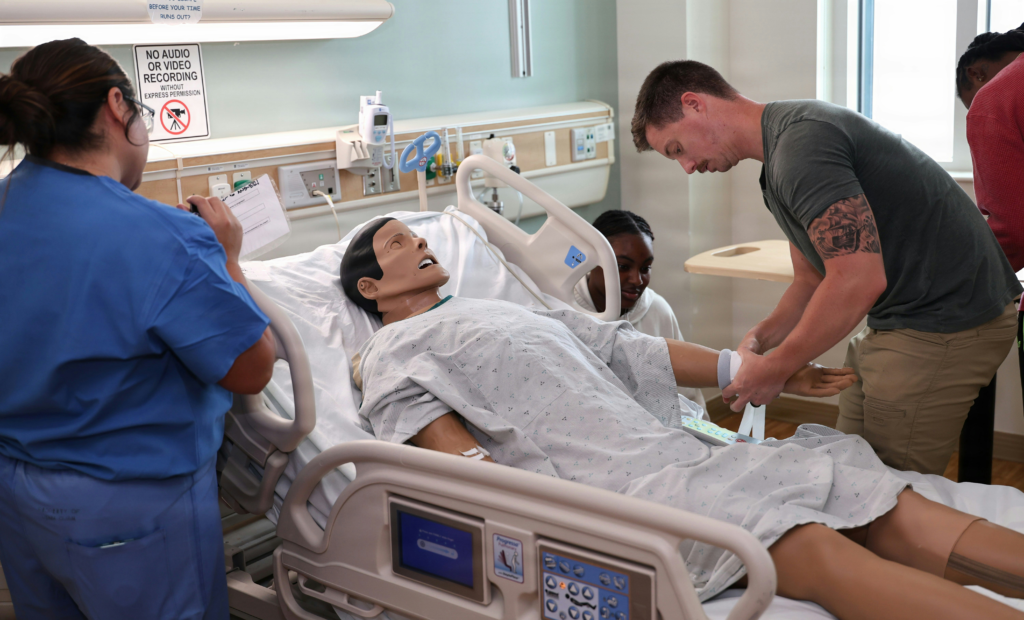
RCDP is a simulation method built around brief cycles of action and directed feedback. The facilitator stops the scenario at a planned learning point, identifies a behavior that needs work, and allows participants to restart and perform the sequence again. The cycle can repeat until the team demonstrates the target behavior more consistently.
The aim is not to embarrass the person who made a mistake. It is to prevent an incorrect sequence from being rehearsed repeatedly. In advanced life support training, for example, a team might repeat the handoff between rhythm recognition and preparation for an appropriate intervention, with attention to role assignment and closed-loop communication.
Choosing when to interrupt is itself an instructional skill. Correcting every small imperfection can break concentration and reduce realism, so facilitators select critical actions and provide focused, observable advice. For instance, a leader might have to repeat a closed-loop instruction until the teammate confirms and completes the task. In the next cycle, the facilitator watches for that improved behavior without supplying the rest of the solution. Repetition targets an operational habit, not merely memorization.
How It Differs From a Standard Debrief
A traditional simulation usually lets the scenario unfold before participants review decisions and outcomes. That full run can be valuable for exploring priorities, team dynamics, and how errors accumulate. RCDP concentrates instead on shorter segments. A correction made a minute ago is tested straightaway, rather than recalled after a long discussion.
These formats are not opposites. A facilitator could use short correction cycles to practice a time-sensitive action, then run a longer uninterrupted scenario to see whether the team can integrate the skill with other tasks. Training objectives, learner experience, and available time should guide the format.
What Research Has and Has Not Established
The 2025 AHA education guidelines say RCDP may reasonably be incorporated into BLS or advanced life support instruction for healthcare personnel. A 2024 systematic review found promising results for some simulated performance measures, including time to defibrillation, but the included studies were limited and their methods varied.
Researchers have not established that RCDP is superior for every learner or that gains in simulated performance necessarily improve patient survival. Nor should the method be described as a mandatory feature of BLS training for healthcare providers. Its value depends on how deliberately the learning points and feedback are designed.
Making Corrections Useful Beyond the Classroom
For teams considering ACLS training for healthcare providers, the useful takeaway is to seek opportunities to practice decisions and communication, not simply finish scenarios. CPR & BLS Training Institute offers instructor-led life support courses for appropriate professionals. Details about course options appear in our training catalog, and you can speak with our representatives for more information.