A learner finishes a round of chest compressions believing the technique was consistent. The instructor noticed good hand placement, but the training mannequin reports shallow compressions and incomplete recoil. That mismatch explains why measurement is becoming an important part of BLS training for healthcare providers.
What Observation Alone Can Miss
High-quality adult CPR depends on several measures working together: compression rate, depth, full chest recoil, and minimal interruptions. The 2025 AHA adult BLS guidelines recommend a rate of 100 to 120 compressions per minute and a depth of at least 5 cm, while avoiding depths greater than 6 cm. Those numbers are difficult to judge reliably by sight alone.
An instructor can spot obvious problems and coach body position. Less visible errors, however, may continue throughout a practice cycle. A learner might keep a steady rhythm but gradually compress less deeply, or lean on the chest between compressions. Feedback-enabled mannequins and training devices can expose patterns that visual assessment misses.
A Correction While the Skill Is Happening
Depending on the equipment, feedback may appear as a screen reading, indicator, or audible prompt. The learner sees whether the next compression falls within the target range and can make a correction immediately. Rather than receiving the broad instruction to “push harder,” the learner can compare performance before and after adjusting technique.
This also changes the instructor’s role. Objective data can direct attention toward a specific issue, while the instructor explains posture, fatigue, safety, and how effective compressions fit into a coordinated response. The device measures selected actions; it does not interpret the entire clinical situation.
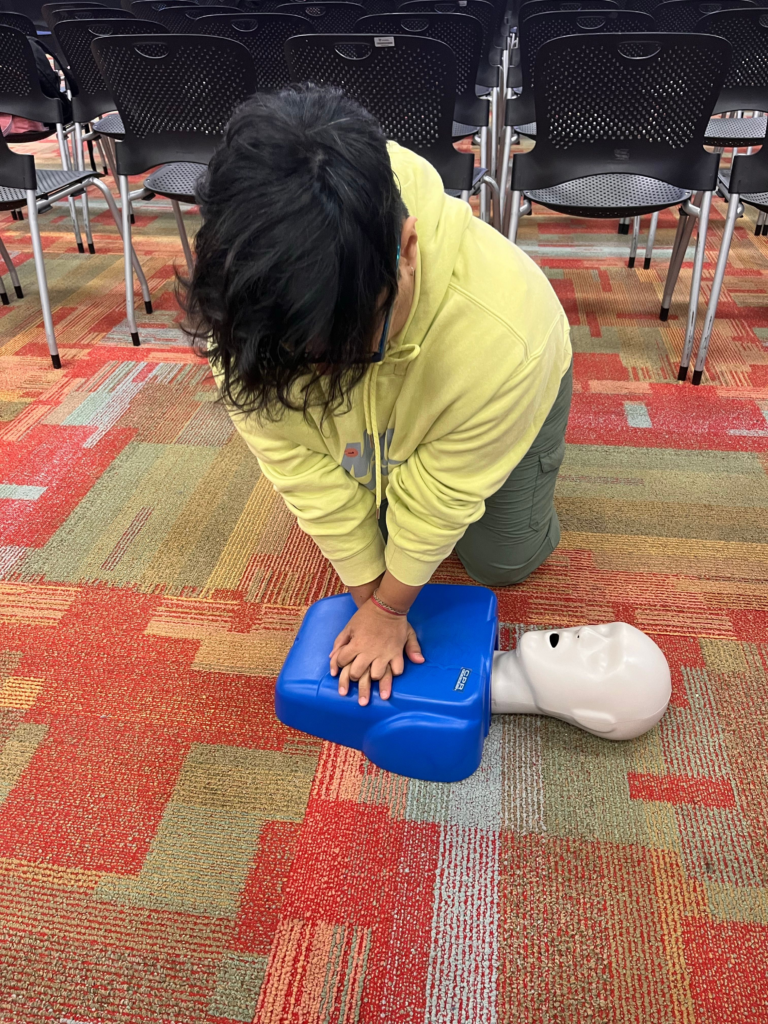
Another advantage appears when practice is repeated. Instead of a single pass-or-fail judgment, the measurements can show whether a correction lasts through successive cycles. Learners may discover that their first few compressions meet the target but later efforts drift. Instructors can use that trend to discuss body positioning, workload, and how team members might maintain consistency across a prolonged response. A score still needs context: different devices measure different variables, and proficiency on one mannequin is not complete clinical readiness.
What the Evidence Supports in 2026
The 2025 AHA resuscitation education recommendations strongly recommend feedback devices during CPR training for healthcare professionals. Evidence from randomized training studies shows better adherence to compression depth, rate, and recoil targets. That is meaningful for CPR training for healthcare professionals, where small technique errors can be repeated without recognition.
The evidence should not be stretched further than it goes. Improved performance on a mannequin is not proof that a particular device improves survival in real cardiac arrests. Researchers still need better information about long-term retention, performance during actual resuscitation, and cost-effectiveness.
Choosing Training That Makes Practice Count
For clinicians pursuing AHA BLS certification, the practical question is how a course helps them recognize and correct their own errors, not whether it advertises the newest equipment. CPR & BLS Training Institute provides healthcare-focused life support education in the Greater Philadelphia area. Readers can review the institute’s BLS course information and get in touch to ask about training formats and current instructional resources.