Pediatric emergencies require a different level of response than adult emergencies. Infants and children are not simply smaller versions of adults; their airways, breathing patterns, oxygen needs, and compensation mechanisms work differently. In a crisis, those differences affect how quickly a child can deteriorate and what intervention must happen first.
General CPR training provides a helpful foundation, but it does not fully prepare responders for pediatric-specific situations. Children are more likely to experience emergencies that begin with breathing problems rather than sudden cardiac arrest. That means airway support, ventilation, and early recognition are often more important in the first moments than compressions alone.
Why Pediatric Emergencies Escalate Faster
Children have smaller airways, higher oxygen demands, and less reserve than adults. Because of that, even a brief period of breathing difficulty can become critical very quickly. A child may still look alert at first, then deteriorate fast once compensation fails.
The most common warning signs are not always dramatic. A child may show labored breathing, nasal flaring, retractions, unusual irritability, or a change in skin color before collapsing. Without pediatric training, these signs can be missed or underestimated.
Common pediatric emergency triggers include:
- Airway obstruction from choking
- Severe asthma or breathing distress
- Allergic reactions causing swelling
- Near-drowning and hypoxia
- Respiratory infections affecting oxygen intake
Airway and Breathing Come First
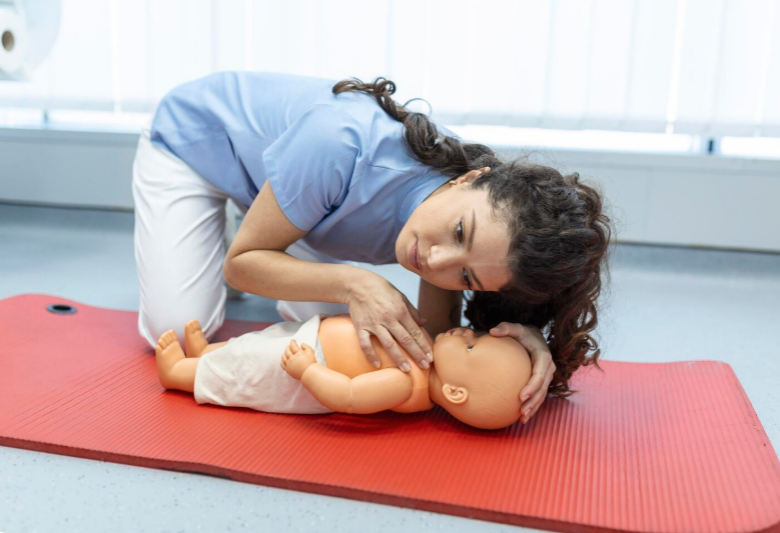
In pediatric response, the priority is often to restore effective breathing before anything else. Infants require neutral head positioning, not overextension. Ventilation must also be adjusted to age and size so rescue breaths are effective without causing harm.
This is one of the clearest differences between adult and pediatric care. Adult CPR often centers heavily on compressions, but children frequently need ventilation support earlier because respiratory failure is the usual starting point.
CPR Technique Must Be Age-Specific
Pediatric CPR is not a generic version of adult CPR. Compression method, hand placement, depth, and pace all change depending on whether the patient is an infant or a child.
Proper pediatric training teaches responders how to:
- Use infant-appropriate compression techniques
- Adjust compression depth to body size
- Deliver rescue breaths correctly
- Recognize when AED use is appropriate
- Switch response priorities based on the cause of distress
Those details matter because incorrect technique can delay care or reduce effectiveness.
Strengthen Your Emergency Response Skills With A Pediatric Life Support Certification
CPR & BLS Training Institute offers American Heart Association–aligned programs designed for healthcare providers requiring structured pediatric emergency training. Courses emphasize hands-on skill development in pediatric resuscitation, airway management, and emergency response sequencing.
Available programs include pediatric life support certification, AHA PALS certification training, BLS, ACLS, CPR & AED training, and first aid courses. Training is available across Philadelphia, Bucks County, Montgomery County, and surrounding regions including Trenton, New Jersey.
For professionals working with children, this training strengthens confidence and improves response accuracy in high-risk situations. It also helps ensure that care is based on pediatric physiology rather than adult-centered assumptions.
Check out the schedule to enroll in upcoming sessions to obtain pediatric life support certification and related AHA credentials required for clinical readiness and emergency response roles.