CPR training is often treated as a one-time requirement. A learner completes a course, earns certification, and is considered prepared to respond to cardiac emergencies. However, clinical research and training outcomes consistently show that CPR skills degrade over time when they are not regularly practiced. This decline is known as skill decay, and it directly affects real-world performance during emergencies.
Even individuals who complete a BLS CPR certification online may experience a reduction in accuracy, speed, and confidence within months of initial training. Certification confirms competency at a specific moment, but it does not guarantee long-term retention of psychomotor skills required in high-pressure situations.
How Quickly CPR Skills Decline
CPR is a psychomotor skill, meaning it depends heavily on muscle memory, repetition, and decision-making under pressure. Unlike theoretical knowledge, these skills degrade when not actively used or reinforced.
Studies in emergency training consistently show that:
- Compression depth accuracy declines within 3–6 months
- Proper hand placement errors increase over time
- Ventilation technique quality drops without practice
- Response confidence decreases even if theoretical knowledge remains
The most significant decline is not just technical—it is hesitation. In emergencies, delayed action can be as critical as incorrect action.
Why Knowledge Alone Doesn’t Prevent Skill Decay
Many learners assume that completing a certification course is sufficient preparation. However, CPR performance relies on more than memorization of steps.
In real emergencies, responders must:
- Recognize cardiac arrest instantly
- Initiate compressions without delay
- Maintain correct rhythm and depth
- Manage stress and environmental pressure
- Coordinate actions with others if present
These are performance-based skills. Without repetition, the brain shifts from automatic response to conscious recall, slowing reaction time significantly.
Even individuals who complete a BLS CPR certification online program may find that theoretical confidence does not translate into physical execution under pressure.
Refresher Training Matters
CPR guidelines are updated periodically based on new clinical evidence from organizations such as the American Heart Association. These updates may include adjustments in compression rate, ventilation ratios, or AED usage protocols.
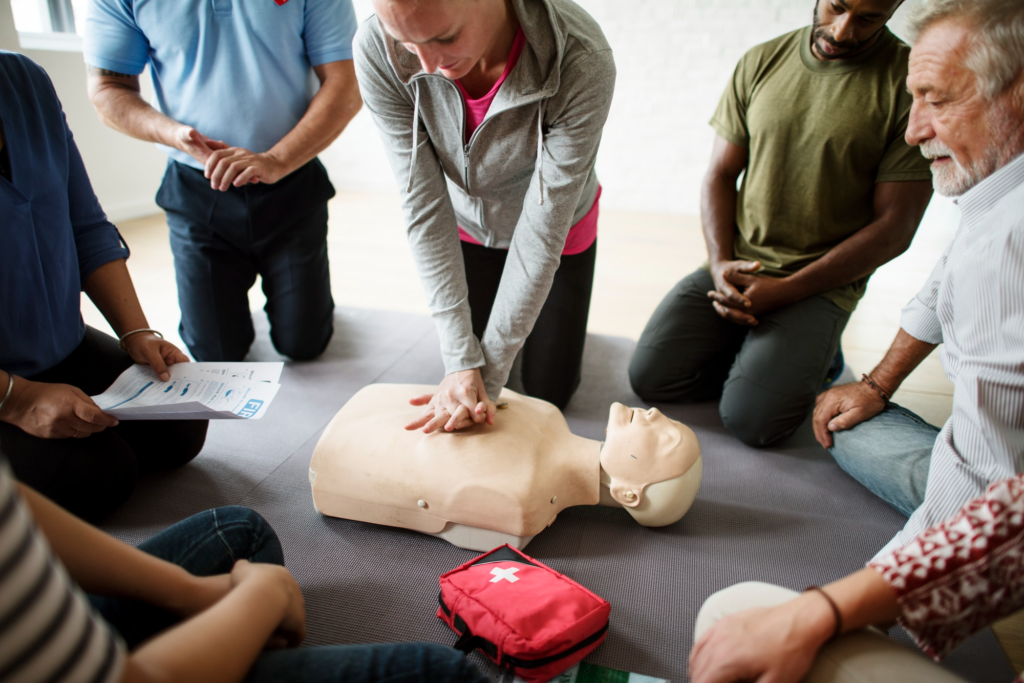
Refresher training ensures that responders remain aligned with current standards while also reinforcing muscle memory before it fades. Short, periodic reinforcement sessions are often more effective than waiting several years for full recertification because they prevent complete skill deterioration.
Refresher exposure helps restore confidence, correct subtle technique drift, and reinforce timing accuracy under simulated conditions.
Blended Learning and Skill Retention
Modern CPR education increasingly uses blended learning models to combat skill decay. These programs combine online theory with in-person hands-on practice.
An online BLS CPR certification format typically includes:
- Self-paced online modules for cognitive learning
- Video demonstrations of CPR techniques
- In-person skill assessments and practice sessions
- Scenario-based simulations for real-world readiness
This structure allows learners to revisit content repeatedly while still maintaining essential physical skill validation through hands-on evaluation.
Blended learning is particularly effective because it supports both knowledge retention and psychomotor skill reinforcement.
Maintaining Readiness Between Certifications
Skill retention is not only the responsibility of training providers; it also depends on ongoing personal reinforcement. Even brief exposure to CPR practice between certifications can significantly improve retention.
Recommended reinforcement methods include:
- Practicing compressions on manikins during refreshers
- Reviewing CPR steps periodically
- Watching updated AHA training demonstrations
- Participating in annual or semi-annual refresher courses
- Engaging in simulation-based learning when available
These small interventions help maintain readiness without requiring full retraining each time.
CPR & BLS Training Institute’s Approach to Skill Retention
CPR & BLS Training Institute provides American Heart Association–aligned training designed to address skill decay through structured learning and practical reinforcement. Their programs combine online coursework with hands-on skills evaluation to ensure both theoretical understanding and physical performance accuracy.
Courses include an online BLS CPR certification, ACLS certification, PALS training, CPR & AED instruction, and first aid certification programs. The training structure is designed to maintain readiness beyond initial certification by reinforcing critical emergency response skills through guided practice and assessment.
Enrollment is available for healthcare providers and emergency responders across Philadelphia, Northeast Philadelphia, Bucks County, Montgomery County, and surrounding areas.