Medical emergencies do not wait for the right person to be in the room. A parent may be the first to notice a child choking. A coach may see an athlete collapse. A coworker may find someone unresponsive near a desk. In many real emergencies, the first response comes from ordinary people before EMS arrives.
That is why CPR training is becoming a practical life skill, not just a healthcare requirement. For people searching for CPR classes in Southampton, PA, the goal is often simple: know what to do when seconds matter.
Emergencies Often Start in Everyday Places
Cardiac arrest, choking, breathing trouble, falls, and injuries can happen at home, in schools, at gyms, in offices, on job sites, or during community events. The CDC advises bystanders who suspect cardiac arrest to call 911, look for an AED, and give CPR until medical professionals arrive. The American Heart Association also notes that immediate CPR can double or triple the chance of survival after cardiac arrest.
This is why parents, teachers, employees, coaches, and caregivers are choosing a first aid and CPR course before an emergency happens. CPR & BLS Training Institute offers AED and first aid training for people who need CPR and first aid certificationfor home, school, workplace, or community readiness.
Training Helps Reduce Hesitation
Many people freeze during emergencies because they are afraid of doing the wrong thing. Training gives them a sequence to follow: check responsiveness, call 911, begin CPR, send someone for the AED, and continue care until help arrives.
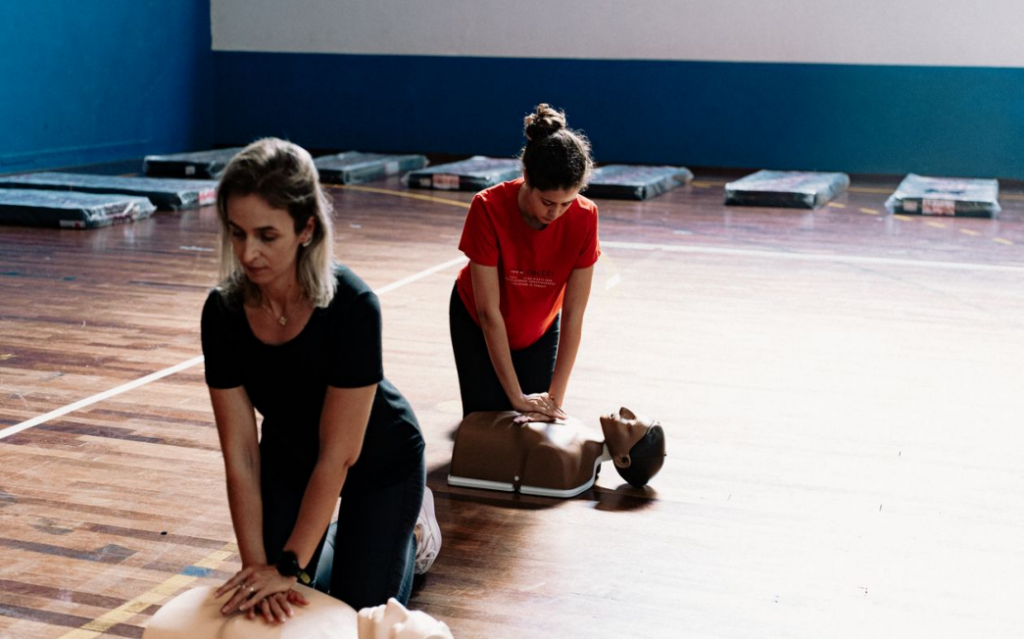
Hands-on practice matters because CPR is physical. Learners practice compression placement, rhythm, AED prompts, and basic first aid steps. This helps turn fear into action without suggesting that any course can guarantee an outcome.
For workplaces, OSHA’s AED guidance encourages readily available AEDs and qualified training. That same idea applies in schools, childcare centers, gyms, restaurants, offices, and houses of worship. Emergency readiness works best when people know where equipment is and how to respond.
Some Roles Need Advanced Certification
Not every learner needs the same course. A parent may need basic CPR and first aid. A teacher may need child-focused emergency skills. A nurse, dental assistant, medical office employee, or responder may need professional-level certification.
CPR & BLS Training Institute offers BLS certification training for learners seeking a BLS certification institute providing qualified instructors and updated material. People looking for an, AHA CPR course, or broader American Heart Association courses can also find training options based on their needs.
For child-focused healthcare roles, the institute provides PALS certification training through a PALS certification institute in PA. CPR & BLS Training Institute also offers ACLS, PALS, and BLS practice tests for learners reviewing before certification or renewal.
Build Emergency Confidence Before It Is Needed
Communities are stronger when more people can recognize emergencies and take the first useful step. CPR training helps families, workplaces, and local organizations prepare with clearer roles, stronger AED familiarity, and more confidence under pressure.
CPR & BLS Training Institute helps individuals, families, employers, and healthcare professionals build practical emergency response skills. Those ready to prepare before a real emergency can schedule CPR, AED, first aid, BLS, ACLS, or PALS training with CPR & BLS Training Institute.