Home is where children eat, sleep, play, explore, climb, crawl, and test every boundary. It is also where many emergencies involving infants and children happen first. A child may choke during a meal, become unresponsive, struggle to breathe, suffer a fall, or have a sudden medical emergency before professional help arrives.
That is why CPR certification for parents is not only for families with medical concerns. It is practical training for everyday moments when quick, calm action matters.
Parents Are Often the First Responders
In a serious emergency, parents and caregivers are usually the first people close enough to act. Calling 911 is essential, but there may still be several minutes before emergency responders reach the home.
The CDC advises bystanders who suspect cardiac arrest to call 911, look for an AED, and give CPR until medical professionals arrive. For families, that message is simple: the first response often begins before the ambulance arrives.
A first aid and CPR course helps parents recognize warning signs, check responsiveness, begin CPR, respond to choking, and understand when to call for emergency help. The goal is not to make parents feel like healthcare providers. It is to help them avoid freezing when their child needs immediate attention.
Infant and Child Emergencies Require Specific Skills
CPR for infants and children is not identical to adult CPR. Hand placement, compression technique, rescue breaths, and choking response can vary by age. That is why parents benefit from training that includes pediatric scenarios, not only adult chest compressions.
MedlinePlus notes that hands-only CPR is not recommended for children, which is one reason training matters for parents. Its infant choking guidance also explains serious warning signs, including difficulty breathing, weak coughing, and inability to cry or make sound.
Parents looking for an American Heart Association CPR class should choose instruction that includes practice, questions, and hands-on correction. CPR & BLS Training Institute offers AED and first aid training for learners who need practical CPR and first aid certification.
Training Helps Reduce Panic at Home
Emergencies feel different when they involve your own child. Even parents who know basic safety tips can panic when a baby is choking or a child becomes unresponsive. Training helps create a familiar sequence: check, call, respond, continue care, and follow emergency instructions.
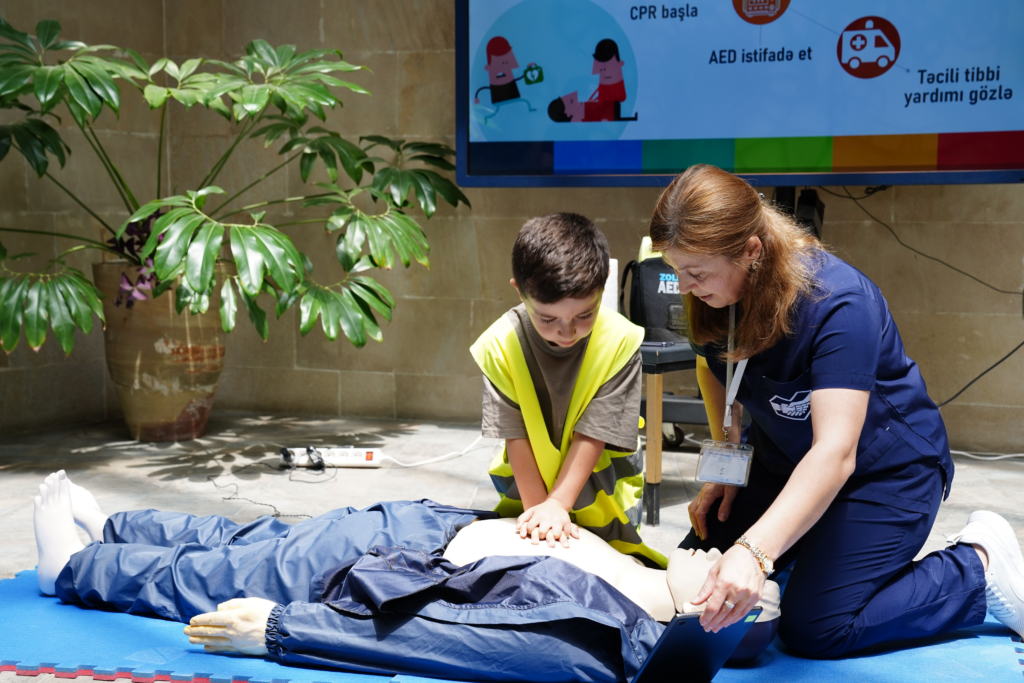
Repeated hands-on practice matters. Parents feel what compressions are like on a manikin. They practice where their hands go. They learn how an AED gives prompts. They also learn what not to do, which can be just as important in stressful moments.
When Parents Need More Advanced Training
Some parents are also healthcare workers, childcare providers, coaches, or school staff. They may need higher-level credentials through a basic life support certification. CPR & BLS Training Institute offers BLS certification training for those roles.
Healthcare professionals who care for children may also need PALS certification training through a PALS certification institute.
For advanced cardiovascular care, CPR & BLS Training Institute also supports learners preparing for an ACLS certification course through ACLS, PALS, and BLS practice tests. These programs may fit parents whose professional roles require American Heart Association courses beyond basic family readiness.
Build Home Readiness Before an Emergency Happens
Parents cannot prevent every emergency, but they can prepare for the first few minutes. CPR certification for parents gives families practical skills, stronger confidence, and a clearer plan for responding at home.
CPR & BLS Training Institute helps parents, caregivers, and professionals build emergency skills through CPR, AED, first aid, BLS, ACLS, and PALS training. Families and caregivers can schedule CPR training with CPR & BLS Training Institute before those skills are needed at home.